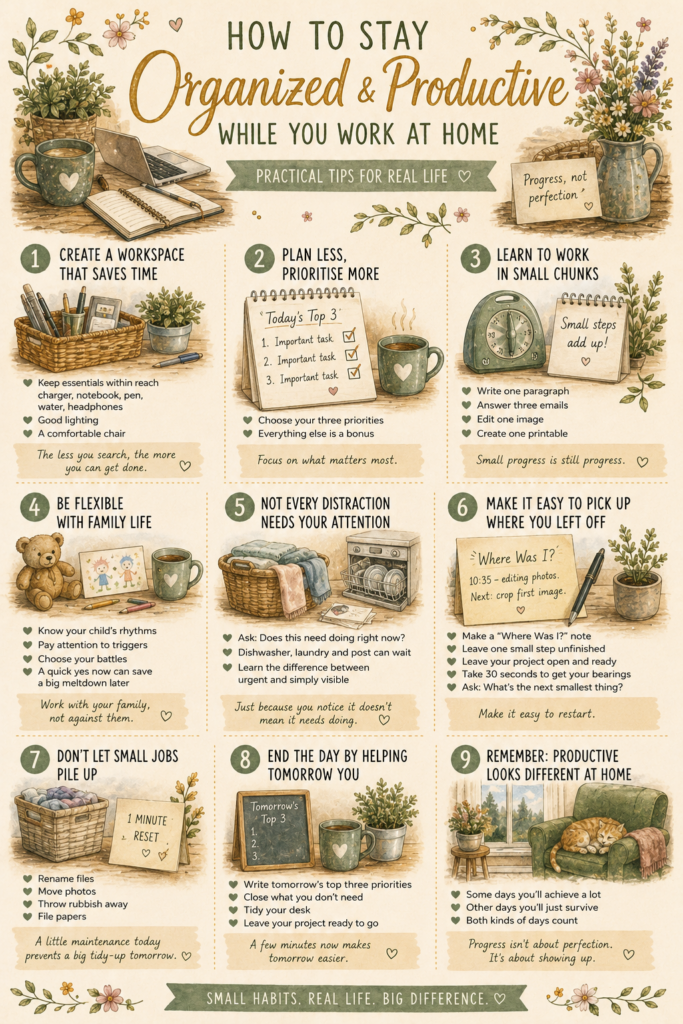
Working from home can be a great way to achieve a better work-life balance, but it can also be challenging to stay organized and productive without the structure of a traditional office environment. Fortunately, there are many tips and tricks that can help individuals stay focused and on-task, even when working from home.
One of the most important things to do when working from home is to create a dedicated workspace that is free from distractions. This might mean setting up a home office or simply finding a quiet corner of the house where you can work without interruption. It’s also important to establish clear boundaries with family members or roommates, so that they understand when you are working and when you are available for socializing or other activities.
Another key to staying productive when working from home is to establish a routine and stick to it as much as possible. This might mean setting regular work hours, taking breaks at specific times, or even scheduling in time for exercise or other self-care activities. By creating a routine, individuals can establish a sense of structure and predictability that can help them stay focused and on-task throughout the day.
This guide will cover a few simple things to help you stay on track:
- Define Your Work Area
- Establish a Routine
- Take Regular Breaks
- Get Organized
- Avoid Distractions
When you plan ahead and accomplish these five easy steps to staying organized and productive while you work at home, you’ll soon be in full command of your lifestyle and discover more balance than you ever thought possible.
Define Your Work Area
Many people start working from home without thinking about creating a dedicated workspace. After all, it’s just a matter of setting up your laptop on the kitchen table, right? Wrong. To be genuinely productive, it’s essential to define your work area and separate it from your living space.
Here’s how to do it.
Choose The Best Place for Your Needs
Consider where in your home is the best place to set up shop. If you have a spare room that you can turn into an office, great. If not, don’t despair — try to find a quiet corner or nook that you can use as your workspace. Design a dedicated space for work so that you can focus, avoid distractions, and set boundaries.
Set Up Your Space, So It’s Comfortable
Once you’ve found the perfect spot, it’s time to set up your workspace. If you can, invest in a high-quality desk and chair. This will help you stay comfortable during long work sessions. Make sure your desk and seating are ergonomic, at a comfortable height for working, and that your chair supports your back. A small desk or even a TV tray can work fine if you don’t have much space.
Stock Your Space with The Tools and Supplies You Need
Now that you have a place to work, it’s time to stock it with the supplies you need. Again, comfort is key here. Put what you need within arm’s reach so you don’t have to get up every five minutes to look for something. A few basics include a lamp, stapler, paper clips, pens, and paper. If you’re primarily doing computer work, you might also want to invest in a second monitor and glasses that block blue light.
Set Boundaries
Once your workspace is set up, it’s crucial to establish some ground rules. First, let family members know that when you’re working in your office, you’re not to be disturbed unless it’s an emergency. Put away toys or other items that might tempt you to take a break from work. And finally, try to stick to a regular schedule as much as possible. This will help your body and mind adjust to the new routine.
Working from home is a boon for productivity if you take the time to set up a dedicated workspace. Set it up so that you have what you need and are comfortable. Plus, talk to your friends and family about your work schedule and tell them what you need to respect your space.
Establish a Routine
Establishing a routine keeps you focused and on track. A daily routine can include wake-up time, breakfast, getting dressed for the day, start and end work time, and break times. Having a daily routine helps avoid procrastination. It might seem boring, but if you get up and do mostly the same daily activities, you’ll find you don’t need motivation anymore because it’s a habit.
To set up your routine to figure out what works best for you, take the following steps:
- Track your time — For a week, keep track of how you spend your time inside and outside work. This will help you identify any timewasters to eliminate them from your routine.
- Find your peak hours — Pay attention to when you feel the most productive and schedule your most important work during those times — if you’re not a morning person, you don’t have to be.
- Know what you need to do each day – Knowing what’s important will help you stick to your routine and avoid procrastination. For example, if you can look at your calendar and know exactly what to do during that time, it will make everything easier.
- Prioritize your tasks – Knowing what is essential and not important is vital to your success. Learn how to know what’s important and what can be left undone or eliminated. Your priorities will be different from someone else’s. For example, you may prioritize family over work if you can financially, and that’s fine.
- Schedule breaks — Just as significant as work time is break time. Schedule time each day to relax and recharge so you can remain fully mindful and productive. For example, if you have kids at home, a great break might be playing a short game or reading a book to them. If you have pets, another break might be taking them for a walk or to the dog park.
- Set boundaries — Once you have a routine in place, it’s essential to stick to it. For example, let family and friends know when you’re working, so they don’t disturb you. And if you need to, set up rules to stay on track.
Working at home will boost your productivity, and the routine and schedule will ensure you get things done. Therefore, it’s crucial to establish a routine to stay organized and focused. With effort and mindfulness to detail, you can create a daily routine that works for you.
Take Regular Breaks
Data shows workers are most productive when they have short breaks to rest and reset throughout the day. Though breaks have been mentioned, it gets its own section because it’s essential.
It is essential for productivity for you to take a break from work every few hours to stay refreshed and focused. So leave your workspace for a few minutes every 90 minutes at a minimum, stretch your legs, eat, or take a breather.
To ensure you take breaks:
- Set a Timer — Set a timer for yourself and make sure to take a break every hour or so. The timer keeps you on track and ensures you’re not working for too long without a break.
- Stretch – If you need to be at your desk for extended periods doing data entry or something for hours, it’s a good idea to stop every 90 minutes at a minimum and stretch. Just stand up, give yourself a stretch, and sit back down.
- Get Up and Move — Get up and move around every few hours. This doesn’t mean you have to go for a run, but simply standing up and stretching your legs does wonder for your energy levels.
- Take Your Time – Don’t feel like you must hurry back to work after your break. Instead, take your time and relax for a few minutes before getting back to it. This will help you avoid feeling overwhelmed and stressed when you sit back down at your desk.
- Schedule your downtime — Make sure to schedule some “downtime” each day – this can be used for things like taking a nap, reading, or just relaxing in nature. Well-paid CEOs always take time from their workday to do something fun like go to the gym, read, or even nap, and you can too.
If you can stick to taking breaks regularly, you’ll likely find that your productivity improves. Working from home can be challenging, so make sure to schedule some time for yourself each day. Whether taking a break to read or walking around the block, taking some time for yourself will help you relax and recharge.
Get and Stay Organized
Working from home is freeing, but it can be easily chaotic if you aren’t organized environmentally, physically, and mentally. To maximize productivity, how can you ensure you stay organized while working from home? Let’s explore the ways.
Create a Daily To-Do List
A daily to-do list is a great way to stay organized and productive. But if you work from home, it can be easy to let your to-do list slide.
To help you stick to your to-do list:
- Set a regular time each day to review and update your to-do list.
- Make sure your to-do list is realistic. Don’t overschedule.
- Break tasks into smaller, more manageable steps.
- Prioritize tasks so you know what needs to be done first.
- Set specific blocks of time to work on each task.
- Make sure you take breaks and allow yourself some downtime.
- Celebrate your accomplishments at the end of each day, no matter how small.
Your to-do list will help motivate you when you’re lacking too. Imagine waking up each morning, looking at your calendar and schedule, and knowing exactly what you will do. How will that change your life?
Keep Your Work Area Tidy
Ensure everything has a place to be or home, so you know where it goes when you’re finished. Working from home can also be a significant distraction if your work area is cluttered and messy.
- Buy The Right Tools — Invest in some storage solutions. This could include shelves, filing cabinets, or even just some boxes to help organize your space.
- Clean Up Your Space — Put away anything that isn’t work-related. This might include personal items, dishes, or laundry. For example, clean up your desk when you’re done working and set up for tomorrow.
- Develop a Cleaning Schedule — Make a daily or weekly cleaning schedule and stick to it. This will ensure that your space stays tidy, and you won’t be distracted by messes.
- Get Your Kids Involved — If you have kids, make sure they have their designated play area away from your workspace. These ideas will keep your work area tidy and avoid distractions when trying to be productive.
While there are folks who will claim they’re more creative amidst the chaos, the truth is, this is few and far between and is statistically unlikely. The main reason is that study after study shows that clutter, whether physical or mental, affects productivity negatively. So the best choices you can make for yourself are backed up by accurate data.
Keep Your Mind Focused
Your mind is like a computer. If it is filled with too many files, programs, and shortcuts, it will start to run slowly and crash frequently. So to keep your mind organized and uncluttered, you need to take some time to declutter it regularly.
Here are some tips on mind decluttering:
- Keep a journal — Writing down your thoughts and feelings can help you to organize them and make sense of them. It can also be a way to release stress and anxiety.
- Make lists — Creating lists can help you remember things and focus on what is essential. For example, try making a to-do list for each day or list things you need to buy.
- Simplify your life — The less clutter you have in your life, the less clutter there will be in your mind. Try to streamline your possessions, your schedule, and your commitments.
- Meditate — Mindfulness meditation can help you focus and become more aware of your thoughts. It can also help you let go of thoughts that no longer serve you.
- Exercise — Physical activity can help release tension and improve your mood. It can also help increase blood flow to the brain, improving cognitive function.
- Get enough sleep — Sleep is essential for good mental health. It can help to improve mood, memory, and concentration.
- Eat healthy — Eating a healthy diet can help to improve your mood and energy levels. It can also help reduce inflammation, leading to better mental health.
- Connect with others — Spending time with loved ones can help to reduce stress and anxiety. In addition, it improves mood and to promotes positive thinking.
A cluttered workspace and mind make it difficult to stay organized and productive. So make a point to tidy up your desk or work area at the end of each day. Having a fresh start each morning will make you feel more accomplished. Then, when you create a system that works for you and stick to it, you will have a space and mindset that is productive and successful.
Avoid Distractions
Distractions are everywhere, especially when you work from home. It can be tempting to watch TV or scroll through social media when you’re supposed to be working, but it’s essential to avoid distractions and stay focused on your task at hand.
You can take decisive action to avoid distractions while working from home.
- Turn off Electronics — Turn off the TV or any other electronics that could potentially be a distraction. Even if you think you work better with ambient sound, it’s unlikely to be true. Most people work better in silence or with instrumental music with no talking.
- Put Your Devices Away — Put away your phone and any other devices that might tempt you to check them while you’re working. If you must walk across the room to get the device, you’re less likely to bother with it.
- Wear Silencing Headphones – If it’s hard for you to block sounds due to being at home, consider wearing silencing headphones while you need to concentrate on work. That way, you won’t hear anything that disrupts your ability to get into a flow.
- Talk to Your Kids – If you have kids talk to them about how to know when you’re working and can’t be disturbed. For example, you may make the sign wearing your earphones or that you closed your office door, depending on where you work. Explain to your kids what constitutes an emergency.
- Talk to your spouse, friends, and family – Let everyone who needs to know your work schedule and when you need time uninterrupted unless it’s an emergency. People who care about you will pay attention, but you may need to remind them by setting up messages on your phone and email that automate the reminder.
- Focus –– Pay attention to the task at hand and on your work. Stay as organized and efficient as possible by sticking to your plan. You can adjust it later if it’s not working out for you, but there is no way to know if it works or not if you don’t stick to your plan. Chances are you’ll finish the work faster by focusing so you can do something else.
Every single day repeat the process. Eventually, staying focused and avoiding distractions will become second nature. You just need to be honest with yourself about when and if you’re distracted and be willing to explore options to avoid distractions.
Working at home successfully means avoiding distractions and staying focused on your work to be successful. This guide helps you know how to prevent disorganization. Follow it, and you will be organized, productive, and successful.