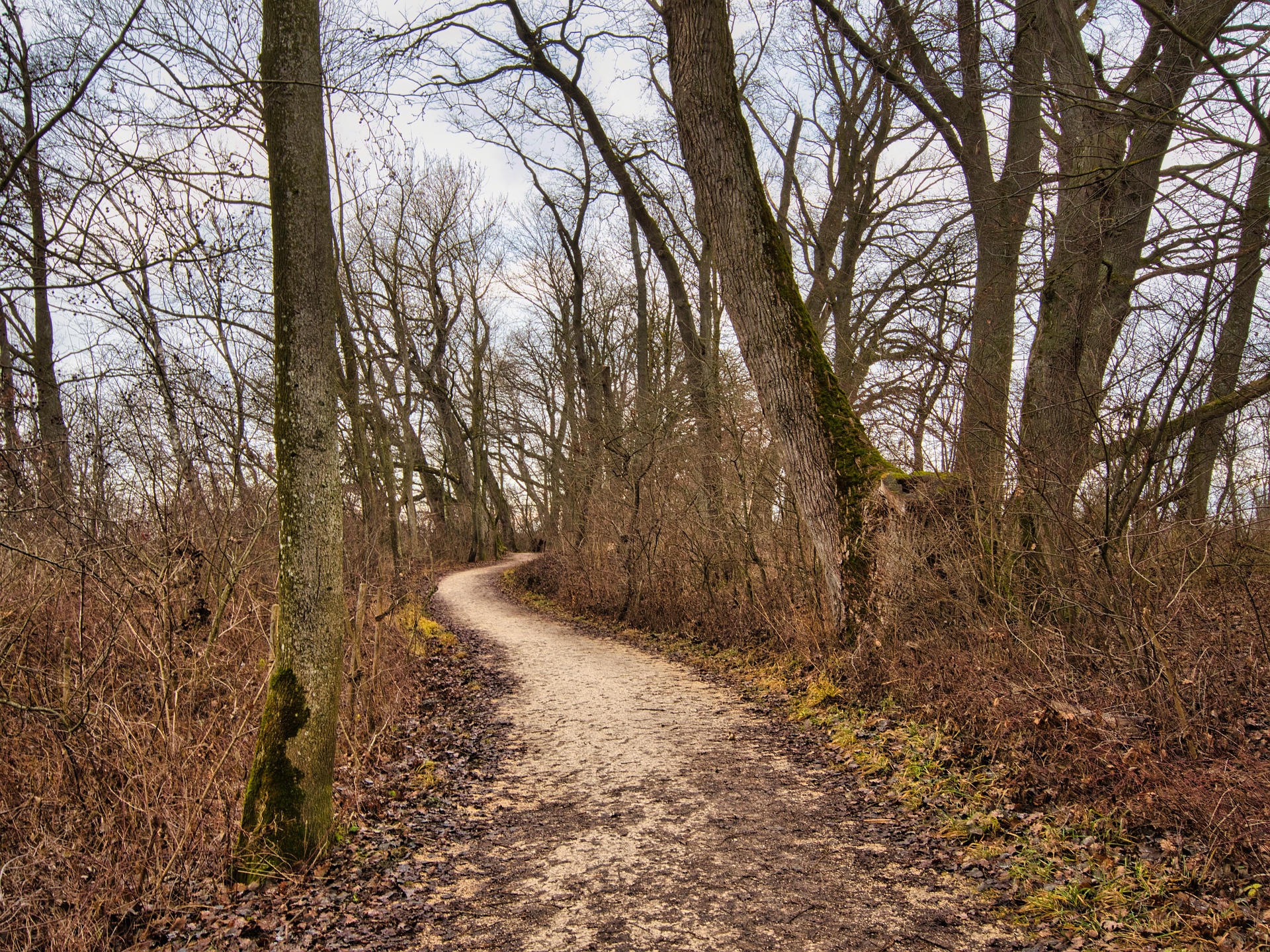

There is a particular point towards the end of autumn when the season begins to feel different.
The brightest leaves have fallen. The evenings arrive surprisingly early. Mornings are colder, the garden looks quieter, and suddenly Christmas seems to be appearing everywhere.
And yet, it doesn’t always feel quite like winter.
This little space between the seasons is one of my favourite times to stop and take stock. Not for a dramatic life overhaul, and certainly not to create another enormous list of things that must be accomplished before the end of the year.
Instead, I like to think of it as a gentle pre-winter reset: a chance to look back at autumn, decide what I want to leave behind, make the darker months a little easier and find a few things to look forward to.
Don’t Rush Straight From Autumn Into Christmas
It sometimes feels as though autumn is becoming shorter.
We spend September looking forward to cosy autumn days, October disappears in a blaze of pumpkins and Halloween, and almost as soon as November begins we’re being encouraged to move straight on to Christmas.
But there is a whole quieter part of the season in between.
Late autumn has its own atmosphere: bare branches, misty mornings, wet leaves, early sunsets, warm drinks, muddy walks and evenings when staying home suddenly becomes much more appealing.
It deserves to be noticed too.
And before replacing one season with the next, I think it’s worth asking a very simple question:
What was good about this autumn?
Look Back Before You Look Forward
A seasonal reflection doesn’t need to be an assessment of how productive you’ve been.
You don’t need to count goals achieved or decide whether you made sufficiently good use of September and October.
Think instead about the little things you’ll actually remember.
What was your favourite autumn day?
Where did you enjoy going?
Was there something particularly delicious you ate or drank?
What beautiful little thing did you notice?
What made you laugh?
Did anything unexpected happen?
Perhaps your favourite memory is something wonderfully ordinary: drinking tea while rain tapped against the window, finding a new book, walking somewhere as the leaves changed colour or having a particularly good conversation.
These moments can disappear surprisingly quickly unless we stop occasionally and notice them.
Before thinking about everything you want from winter, give autumn a little space of its own.
And What About All the Autumn Things You Didn’t Do?
This is one of the reasons I don’t particularly like turning seasonal bucket lists into challenges.
They’re supposed to make life more enjoyable.
But it’s very easy to reach the end of a season and suddenly think:
I never went to that place.
I didn’t bake that cake.
I meant to have an autumn picnic.
I never finished that book.
I didn’t do half the things on my autumn list.
But does it really matter?
Take the things you didn’t do and put them into three imaginary piles:
Let it go.
Perhaps you don’t actually want to do it anymore. It sounded appealing in September, but now you don’t care. That’s a perfectly good reason to forget about it.
Save it for next autumn.
Some experiences genuinely belong to a particular season. Keep the idea and enjoy it another year.
Do it this winter instead.
Plenty of supposedly autumnal activities don’t have an expiry date at all.
And that last category may be bigger than you think.
Our Seasons Don’t Always Follow the Calendar
Here in the UK, the boundary between autumn and winter can be particularly blurred.
Our winters increasingly contain long stretches of mild, rainy and grey weather rather than the crisp frost and picturesque snow we traditionally associate with winter. Bare trees may tell us that winter has arrived while the weather outside still feels remarkably like late autumn.
There are much bigger discussions to be had about why our seasons are changing, but that’s not what I want to explore here.
Instead, I’ve been thinking about one small everyday consequence of it.
We often have more time to enjoy the things we associate with autumn.
A woodland walk doesn’t suddenly stop being enjoyable because December has arrived.
Neither does visiting a beautiful old town, sitting in a café while rain runs down the windows, reading somewhere cosy, writing in a notebook, making warming drinks, wandering through the countryside or taking photographs of misty landscapes.
If something you wanted to do in October still sounds enjoyable in November or December, why impose an artificial deadline on it?
Perhaps some of your unfinished autumn plans aren’t really unfinished at all.
Their season simply lasts a little longer.
Let the seasons inspire you, not give you another list of deadlines.
Say Goodbye to Autumn Properly
I don’t mean that you need to perform an elaborate seasonal ritual—unless you’d enjoy doing one, of course.
It can be as simple as making a cup of tea, finding your notebook and spending ten quiet minutes thinking about the season that’s ending.
Try completing these sentences:
I’m grateful for…
I’m proud that…
I wish I’d made more time for…
I’m ready to let go of…
I want to carry forward…
One thing autumn reminded me about myself is…
And finally:
Goodbye, autumn. Thank you for…
I love the idea of ending a season this way because it gives us permission both to appreciate it and to move on.
You don’t need to carry every unfinished plan, abandoned intention or disappointment into winter with you.
Some things can simply stay behind.
Make Winter a Little Easier Before It Arrives
Once you’ve looked backwards, you can start looking ahead.
This is the practical part of a pre-winter reset—but it doesn’t need to become a giant cleaning and organising challenge.
Think instead about the little things that will make everyday winter life easier.
You might:
- bring out warmer bedding and blankets;
- find your winter coat, gloves and scarves before you actually need them;
- check the heating and deal with obvious draughts;
- replace batteries in torches or other winter essentials;
- put away things you won’t use again until spring;
- stock the cupboard with ingredients for a few easy warming meals;
- replenish your favourite teas, coffee or hot chocolate;
- change harsh lighting for softer lamps in the places where you spend your evenings;
- create one particularly comfortable place to read, write, craft or simply sit.
You don’t have to reset your entire house.
Choose the changes that will actually make your winter easier.
Prepare for the Darker Days Too
Winter preparation isn’t only about the house.
The shorter days change our routines.
There may be less daylight available for walking. Going out in the evening becomes less appealing. Grey weather can make an ordinary Tuesday feel considerably more gloomy than it did in June.
Rather than pretending this doesn’t affect us, it can help to think ahead.
When can you realistically get outside during daylight?
What kind of movement still appeals when the weather is unpleasant?
Which easy meals make cold days better?
What helps you unwind in the evening?
What can you do at home when you’re tired and don’t particularly want to go anywhere?
This is also a good time to make a gloomy-day comfort list.
Don’t wait until you’re fed up with the weather and can’t think of anything to do.
Your list might include reading, colouring, sketching, writing a letter, making tea properly instead of hurriedly, watching an old favourite film, listening to music, baking something, taking a short walk, browsing through a beautiful book or spending half an hour on a creative project.
Nothing revolutionary is required.
The point is simply to remember that a grey day doesn’t have to become a wasted day.
Give Yourself Something to Look Forward To
Preparing for winter can easily become a list of sensible chores.
Check the heating. Find the coat. Buy the batteries.
Useful, certainly. Inspiring, not particularly.
So balance practical preparation with anticipation.
Think of a few things you’d genuinely like to enjoy this winter.
Choose a book for the first really cold weekend.
Find a new recipe you’d like to try.
Plan a winter walk or day out.
Pick a creative project.
Arrange to see somebody.
Make a little list of films for dark evenings.
Find somewhere you’d like to visit.
Start a letter-writing habit.
Choose a tea you’ve never tried.
It doesn’t need to be an impressive winter bucket list.
Sometimes having one small thing ahead that you’re looking forward to is enough to make an ordinary week feel different.
How Do You Want Winter to Feel?
This might be my favourite question in the whole reset.
We’re so often encouraged to ask:
What do I want to achieve this winter?
Try asking something different:
How do I want my winter to feel?
Perhaps you want it to feel:
Cosy.
Calm.
Creative.
Connected.
Restful.
Simple.
Curious.
Adventurous.
Hopeful.
Choose three words.
Then think about what those words actually mean in everyday life.
If you want a creative winter, perhaps you need to leave your sketchbook somewhere visible instead of tucked away in a drawer.
If you want a cosy winter, perhaps improving one corner of your living room matters more than redecorating the whole house.
If you want a connected winter, perhaps you could write more letters, invite someone for tea or make a point of calling somebody regularly.
If you want a restful winter, perhaps the answer isn’t another elaborate evening routine. It might simply mean deciding that some evenings don’t need to be productive.
Small choices shape the atmosphere of a season far more than ambitious plans do.
A Gentle Pre-Winter Reset
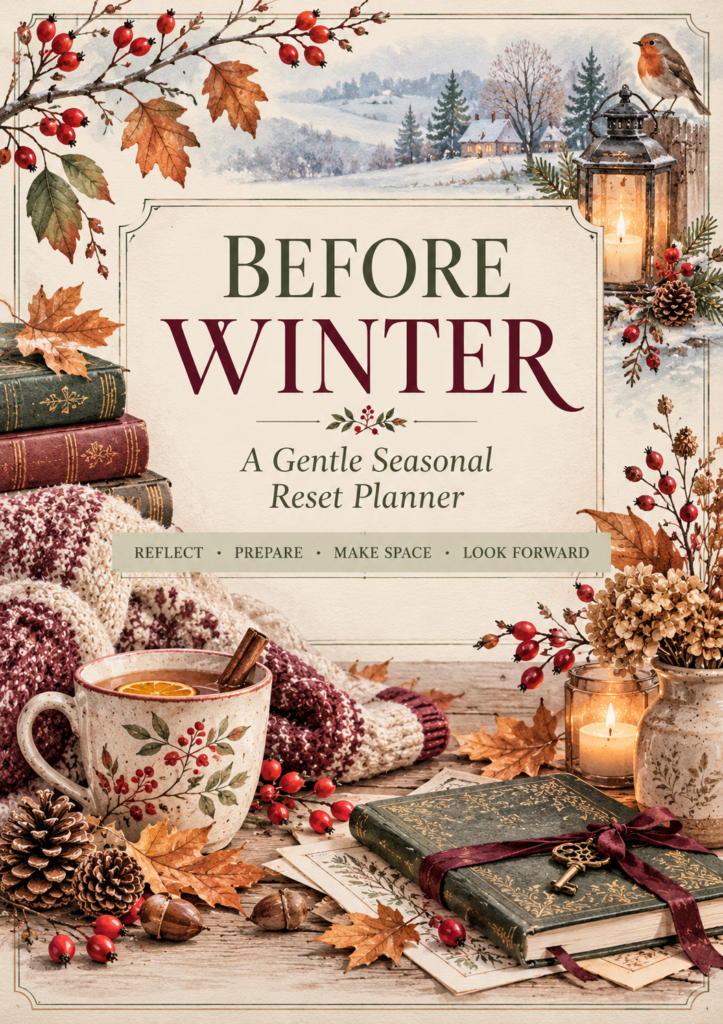
This idea inspired me to create my Before Winter Reset Planner (download for FREE at the end of this page).
I wanted something that wasn’t simply another winter goal planner or collection of habit trackers.
Instead, it follows the transition between the seasons: looking back at autumn, remembering the good parts, deciding what to do with unfinished plans, letting go of things that no longer matter and gradually turning towards winter.
Pages such as Autumn Highlights, Autumn Things I Didn’t Do, Leaving Autumn Behind and Hello, Winter are designed to make that transition feel intentional without making it another job to complete.
Because that’s really the idea behind the whole reset.
You don’t need to emerge from autumn as a newly organised, perfectly prepared version of yourself.
You can simply make winter a little easier—and perhaps a little more enjoyable.
Before Winter Begins
Before the season changes completely, take an hour—or ten minutes, if that’s what you have—and ask yourself:
What do I want to remember about this autumn?
What didn’t happen, and does it still matter?
What am I happy to leave behind?
What would make the darker months easier?
What am I looking forward to?
And how would I like winter to feel?
Then make whatever small preparations seem useful, forget the rest, and allow the next season to arrive in its own time.
There is no deadline for enjoying autumn.
There is no requirement to have winter perfectly planned.
And there is certainly no need to rush from one season to another simply because the shops, social media or calendar tell you that it’s time.
Notice what’s changing. Keep what you love. Let go of what you don’t need. And leave a little room for whatever the next season brings.
Download our free checklist here (just right click and select Save as):
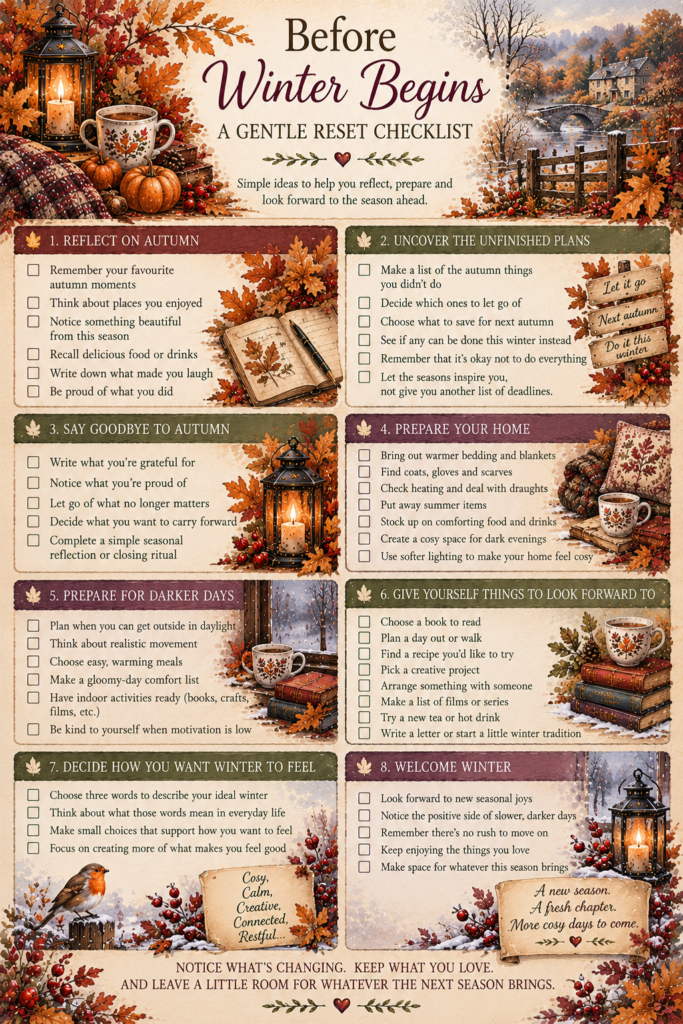
Enjoyed this little checklist? Download the “Before Winter” planner for FREE (just click on the image):
Enjoyed this? Stay for tea.
Get new seasonal printables, cosy ideas and creative ways to make everyday life feel a little freer — delivered occasionally to your inbox:
Before you go, check our latest blog posts:
- Before Winter Begins: A Gentle Reset for the Changing Season
- 15 Ways to Add a Little Poetcore to Your Life — and Feel More Free
- How to Enjoy a Gloomy Day: 15 Cosy Things to Do When the Weather Is Grey
- The Lost Pleasure of Writing a Real Letter
- How to Bring a Little Gilmore Girls Autumn Into Your Life