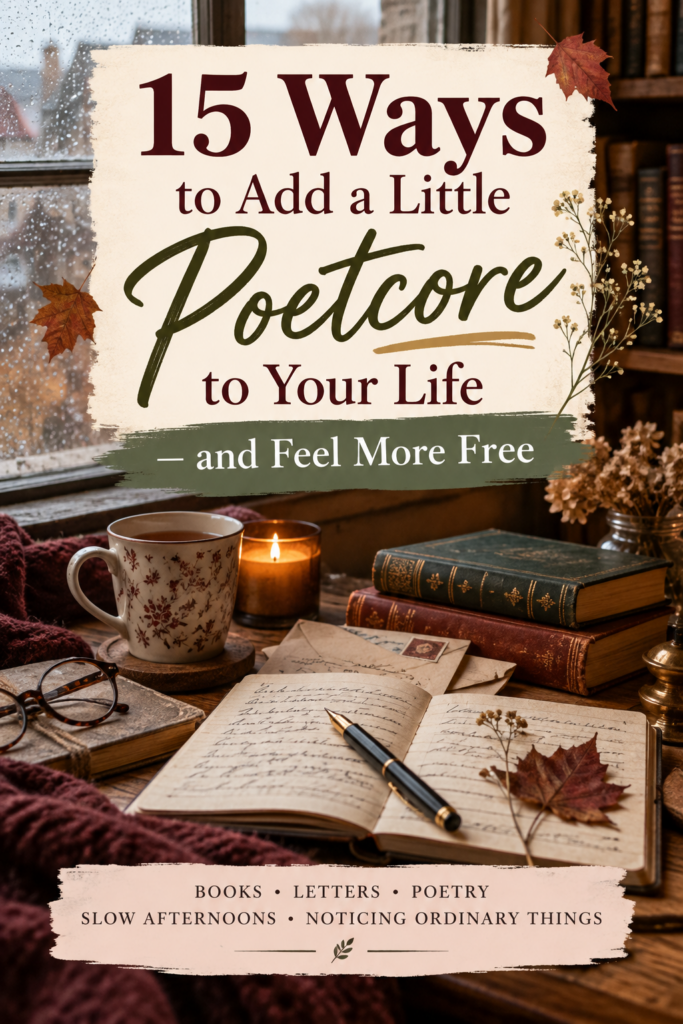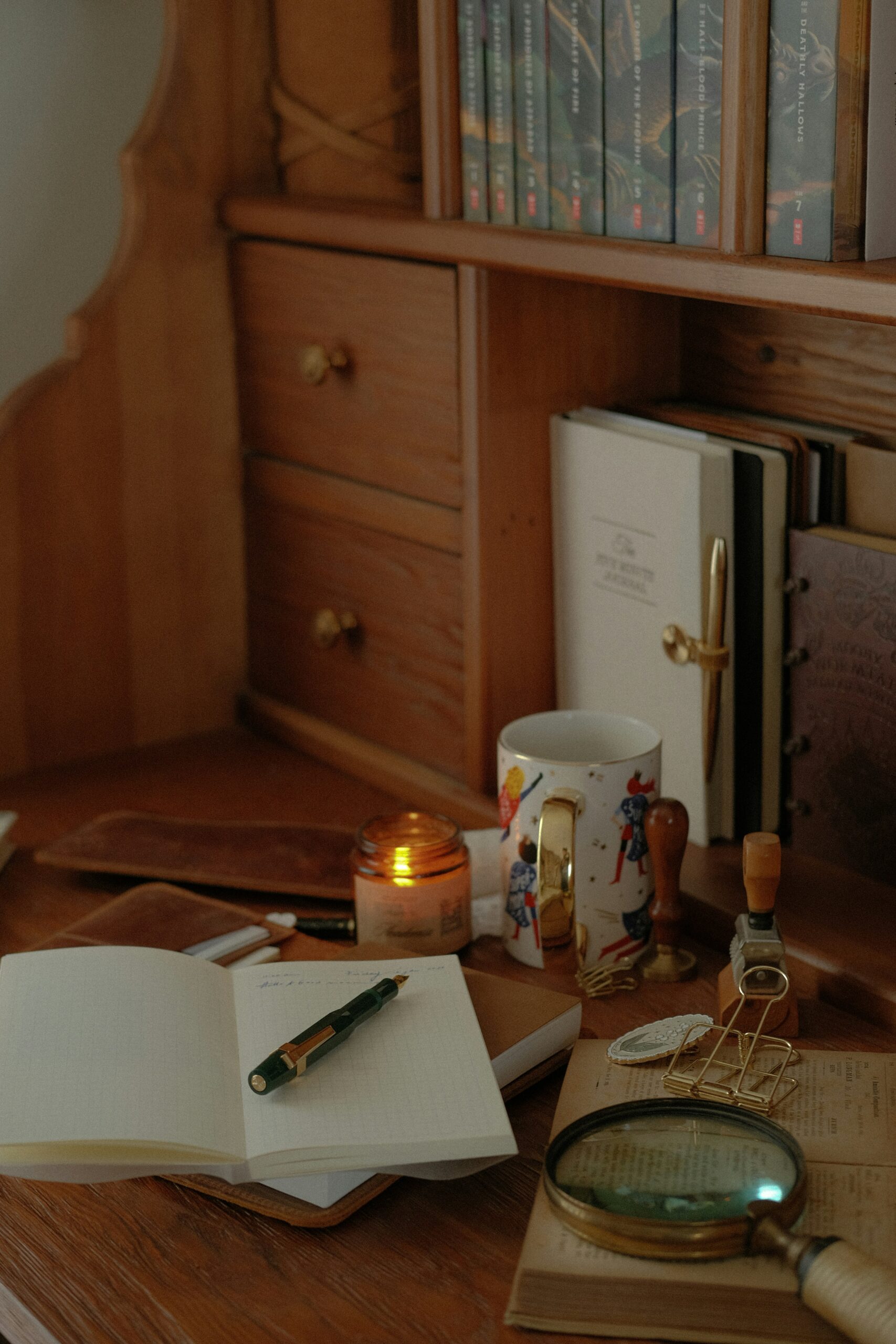
There is something rather appealing about the Poetcore trend.
Old books and handwritten pages. Fountain pens. Slightly untidy desks. Long afternoons in cafés. Poetry scribbled into notebooks. Libraries, vintage clothes, letters, typewriters and walks taken simply to think.
It’s beautiful to look at, of course. But I think there is something more interesting hiding underneath the aesthetic.
You don’t actually need a vintage blazer, an antique writing desk or an expensive fountain pen to bring a little Poetcore into your life.
At its heart, it can be much simpler: read, write, notice things, spend some time away from screens and occasionally do something simply because it makes your life more interesting.
And perhaps that is why Poetcore appeals to me.
There is a small sense of freedom in choosing something slow and unnecessary in a world that constantly encourages us to be faster, more productive and more efficient.
Not freedom from all the responsibilities of ordinary life, obviously. But little pockets of freedom within it.
Here are 15 ways to find some.
1. Carry a Notebook With No Particular Purpose
Not a productivity planner. Not a habit tracker. Not a journal you promise yourself you’ll faithfully complete every evening.
Just a notebook.
Write down interesting phrases, things you notice, ideas, snippets of conversations, questions, descriptions of places or completely random thoughts.
Leave three pages blank if you want. Don’t write in it for a fortnight. Start halfway through.
There are no rules.
A little freedom: your notebook doesn’t have to be useful.
2. Write Something Nobody Will Ever Read
Write a poem.
Or a paragraph. Or a tiny story. Describe the view from your window. Invent a conversation between two strangers you saw in a café.
It doesn’t have to be good.
More importantly, you don’t have to post it anywhere.
We’re increasingly encouraged to turn creativity into content. A photograph becomes a post. A hobby becomes a side hustle. An idea becomes something that needs an audience.
Try making something that belongs only to you.
A little freedom: creativity doesn’t have to perform.
3. Read a Poem Slowly
Poetry doesn’t need to mean sitting down with an enormous collection of serious literature and trying desperately to understand what the poet meant.
Find one poem that interests you.
Read it slowly. Read it twice. Read it aloud if you like.
You might love it. You might decide you don’t like it at all.
Both are perfectly acceptable outcomes.
A little freedom: you are allowed to have your own response to something.
4. Write a Real Letter
A message would be quicker.
That’s partly the point.
Choose someone you’d genuinely like to write to, find some paper and tell them what’s been happening in your life. Ask questions. Include something funny you noticed. Decorate the envelope if that makes the process more enjoyable.
A letter becomes a physical little object that has travelled from one person’s hands to another.
And unlike a message composed in thirty seconds while doing three other things, writing one asks for your attention.
A little freedom: choosing connection over efficiency.
5. Spend an Afternoon in a Library
Libraries might be one of the easiest ways to enjoy the Poetcore feeling without spending anything.
Don’t just collect the book you’ve already reserved.
Wander.
Look at shelves you don’t normally visit. Pick up an old book because its title intrigues you. Sit somewhere quiet and read for a while.
You don’t even have to leave with anything.
A little freedom: curiosity doesn’t need a destination.
6. Wander Through a Second-Hand Bookshop
Second-hand bookshops are even better when they’re slightly chaotic.
Browse shelves. Read inscriptions inside old books. Look at beautiful covers. Find subjects you’d never deliberately search for online.
Buy something if you find a treasure, but don’t turn the visit into another shopping mission.
Browsing is an activity in itself.
A little freedom: you don’t always need to know what you’re looking for.
7. Sit in a Café and Observe
Take a notebook if you like, but leave your laptop at home.
Have your coffee or tea and simply pay attention for a while.
What are people talking about? What’s happening outside the window? What music is playing? What does the room smell like? What tiny details would you normally miss because you were looking at your phone?
You don’t need to turn any of it into writing.
Just notice.
A little freedom: your attention belongs to you.
8. Take a Walk Without Measuring It
No step target.
No calories burned.
No need to get somewhere as quickly as possible.
Choose a street you’ve never walked down, wander through a park, explore an old part of town or take the longer route home.
Look at houses. Notice gardens. Read old plaques. Photograph something strange or beautiful.
Walking doesn’t always have to be exercise or transport.
A little freedom: not everything has to count towards something.
9. Start a Commonplace Book
A commonplace book is simply somewhere to collect things you want to remember.
Quotes. Lines from books. Poems. Recipes. Ideas. Interesting facts. Song titles. Thoughts. Little sketches.
Unlike a diary, you don’t need to document your life chronologically.
It’s more like creating a paper collection of things that have caught your attention.
And it can be as neat or gloriously messy as you like.
A little freedom: collect what interests you, not what an algorithm thinks should interest you.
10. Have an Analogue Hour
Put your phone somewhere inconvenient for an hour.
Read. Sketch. Write. Colour. Do a puzzle. Listen to an album without simultaneously scrolling through something else.
Make tea and actually drink it while it’s hot.
You might be surprised by how long an hour feels when it isn’t divided into dozens of tiny pieces of digital information.
A little freedom: being temporarily unavailable.
11. Read Somewhere Unexpected
Books don’t have to live beside the sofa or bed.
Take one to a café. Read beneath a tree. Sit on a bench. Find a quiet corner of a museum or library. Take a book into the garden with your morning tea.
Even twenty minutes somewhere different can make reading feel less like another thing you squeeze in before bed.
A little freedom: changing the scenery without needing a big adventure.
12. Write About Something Completely Ordinary
You don’t need heartbreak, moonlight or dramatic windswept cliffs to write something interesting.
Describe making your morning tea.
Write about the neighbour’s cat appearing in the garden.
Describe a rainy bus stop, an untidy kitchen, the first cold morning of autumn or somebody’s abandoned shopping list you found in a trolley.
Ordinary life contains far more detail than we usually notice.
A little freedom: deciding for yourself what is worth paying attention to.
13. Keep the Things People Write to You
Letters, postcards, birthday notes, funny little messages, cards from people you care about.
Keep some of them.
Put them in a box, tie them with ribbon, tuck them into a journal or use whatever system makes sense to you.
Digital conversations disappear remarkably easily. Handwriting preserves something else: the marks another person physically made while thinking about you.
A little freedom: keeping something simply because it matters to you.
14. Make Something Without Trying to Monetise It
This might be my favourite Poetcore idea.
Draw badly.
Write mediocre poetry.
Make a collage. Decorate a notebook. Take photographs that aren’t destined for Pinterest or Instagram. Learn a song. Press some leaves.
You don’t need to become good enough to sell it.
You don’t need to build an audience around it.
You don’t even need to show anybody.
Sometimes a hobby is allowed to remain a hobby.
A little freedom: not every skill needs to become productive.
15. Be Deliberately Inefficient Sometimes
Write the letter when an email would be quicker.
Walk when you could drive, if you have the time.
Browse the shelves instead of searching for the exact book.
Make tea in a pot.
Write by hand.
Take the scenic route.
Efficiency is enormously useful. Most of us couldn’t manage ordinary life without it.
But efficiency doesn’t have to win every single time.
Sometimes the slower option gives you something the efficient one doesn’t.
A little freedom: choosing experience over speed.
Poetcore Isn’t Really About Looking Like a Poet
There is nothing wrong with enjoying the aesthetic side of Poetcore.
If you love vintage jackets, battered leather bags, fountain pens, old typewriters and rooms filled with books, enjoy them.
But you don’t need to buy a new wardrobe or redecorate your home to participate.
The part of Poetcore I find much more interesting can’t really be bought.
It’s permission to be curious.
To notice ordinary things.
To make something without asking whether it’s good enough.
To read something that won’t improve your career.
To write a letter when a message would be quicker.
To wander through a second-hand bookshop without needing anything.
To occasionally choose the slower way simply because you enjoy it more.
None of these things will give us complete freedom from responsibilities, schedules or things that simply have to be done.
But they can create small pockets of freedom inside an ordinary life.
And sometimes those are the ones we actually have access to.
Before you go, check our latest blog posts:
- Before Winter Begins: A Gentle Reset for the Changing Season
- 15 Ways to Add a Little Poetcore to Your Life — and Feel More Free
- How to Enjoy a Gloomy Day: 15 Cosy Things to Do When the Weather Is Grey
- The Lost Pleasure of Writing a Real Letter
- How to Bring a Little Gilmore Girls Autumn Into Your Life